
As pointed out in a recent article from The New York Times, many dentists are experiencing a rise in patients coming to their offices with complaints of migraines, tooth fractures, jaw pain and tooth sensitivity. These issues have all been caused by bruxism, a condition where a patient clenches and grinds his or her teeth and jaws due to stress, anxiety, lack of sleep and poor posture. The increase in teeth grinding and clenching is thought to be due to the increased stress levels caused by the coronavirus pandemic.
Bruxism is a relatively common condition involving the clenching and grinding of the teeth and jaws. Grinding is the action that occurs when you move your jaw back and forth, while clenching is the action that occurs when you bite down excessively for long periods. It usually happens when you’re asleep or experiencing intense emotions. You may not even know that you grind your teeth!
Teeth grinding causes a lot of damage to both the structure and the enamel of your teeth. This damage can lead to an increased risk of tooth decay, as well as a feeling of pain in your teeth, jaw, face and neck. It can also lead to headaches and disrupt your sleep.
Some factors that make it more likely that you will develop bruxism include:
It’s believed that both daytime and nighttime bruxism are caused by a combination of genetic, physical and psychological factors. People who experience daytime bruxism typically do so due to intense stress and other negative emotions. Here are a few tips about how you can lessen or prevent bruxism during the day and night:
The best way to receive assistance for clenching and grinding your teeth is to see a dentist. Your dentist may wish to prescribe you with a custom-fitted mouth guard that you will wear every night when you go to sleep. This night guard will protect your teeth from the clenching and grinding and assist in preventing pain from your temporomandibular joint. If you are interested in getting a custom mouth guard, schedule a consultation with one of our dentists today.
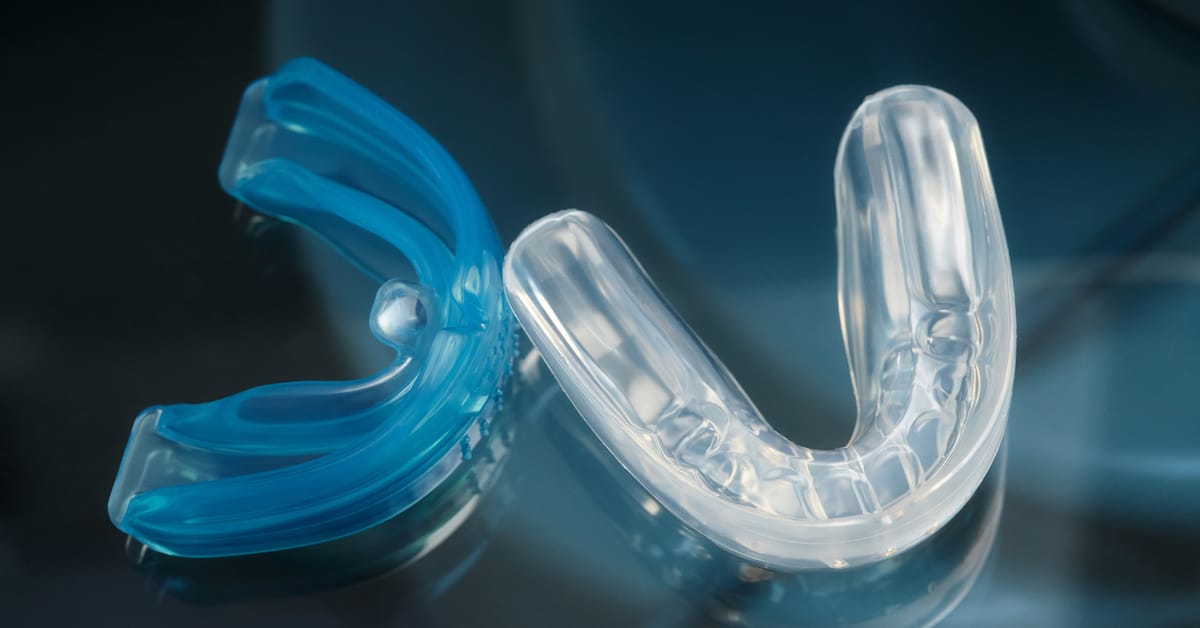
Custom mouth guards look a lot like teeth whitening trays. They are worn over the teeth and cushion them from grinding and clenching. These devices are also referred to as bite splints, occlusal splints and occlusal guards. While these appliances don’t stop you from clenching and grinding your teeth, they do an excellent job of preventing damage to your teeth.
If you are experiencing morning headaches, TMJ jaw pain or have damage to your teeth, jaw, crowns or other dental restorations, your dentist may recommend that you wear a custom-fitted teeth protector when you sleep at night.
Known as TMJ syndrome for short, temporomandibular joint syndrome is a condition affecting the way that the jaw muscles or the joint connecting the jaw to the skull work. The most common reasons behind this condition include bruxism and jaw injuries. TMJ syndrome symptoms are:
There are many different treatment options for TMJ syndrome and bruxism. Mouth guards are one of the most affordable, non-invasive and convenient treatments for the conditions. If you wear a properly fitted teeth protector, it will help to properly align your teeth and jaw, leading to the alleviation of TMJ symptoms like jaw tension, pain and headaches.
Did you know that bruxism is one of the leading causes of root canals? The damage done to the teeth while clenching and grinding them leads to tooth decay. Severe tooth decay can infect the teeth and the gums, leading to expensive treatments like root canals. In addition to this, clenching the jaw and teeth can lead to a lot of discomfort and pain.
While mouth guards can be purchased in drug stores or online, it’s best to have one fitted to your mouth. A custom-fitted appliance:
Once you and your dentist have decided that you need to wear a mouth guard, he or she will create a mold of your teeth. This mold will be used to construct your mouth guard from high quality plastic materials. Once your dentist has ensured that the device fits properly, you will wear it every night when you sleep. You’ll find that you will be able to breath and speak as normal when wearing it. While it may take a few days to adjust, you soon won’t notice that you are wearing it at all.
The materials and specifications utilized in creating a mouth guard factor into the overall price. However, it’s important to note that the cost of a custom night guard is usually cheaper than the interventions required if bruxism is left unchecked. We will provide you with an overall estimate of cost. Your dental insurance provider may also cover part of the cost.
If you’ve been suffering from the side-effects of bruxism, contact New Castle Dental Associates to schedule a consultation. We want to help find the right bruxism or TMJ syndrome treatment for you.